A Morning For Mindfulness
This morning I woke up and decided to work on my mindfulness and self-care routine because both have been sorely


Walking can do great things for your cardiovascular fitness as well as your mental health. It can also help you build the muscles in your legs and abs. Most people reach for weights when they want to give their muscles a good workout, but walking, which is a day to day activity, is often overlooked as a muscle building exercise. Walking is highly encouraged for its cardio benefits for good heart health, but a nice long walk is also a great way to work your leg muscles. This explains why you might get stiffness in your legs after a long hike or a busy day on your feet. Walking can be a great workout for your legs because as we step, we are engaging the quads, hamstrings, calves, glutes and abdominal muscles. All these muscles in the leg work together to provide support, control and stability to the body while walking. In addition, these movements help to strengthen and condition the leg muscles.
When we walk, we drive the leg forward and we engage our quads and hamstrings to help bend the knee and press off from the ground. The calf muscles extend the ankles which assists with the momentum of your stride. Together with the thighs, they react to the foot hitting the floor beneath them and the shin bone rotates internally to allow greater movement in the feet. The glutes are one of the most powerful muscles in the body as they stabilize our body during walks. With frequent walking, the glutes can become much stronger. Another benefit is that our abdominals are engaged while walking which helps to keep your balance as you shift weight from one foot to another.
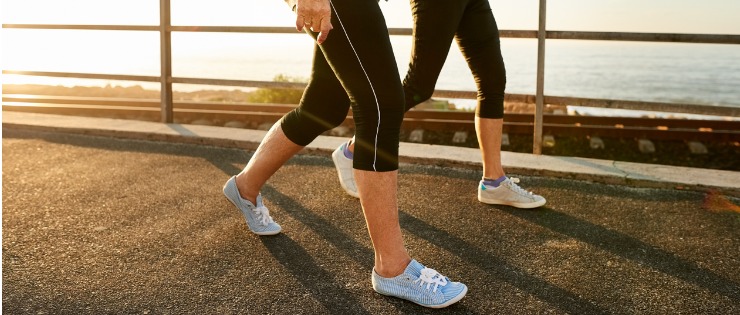
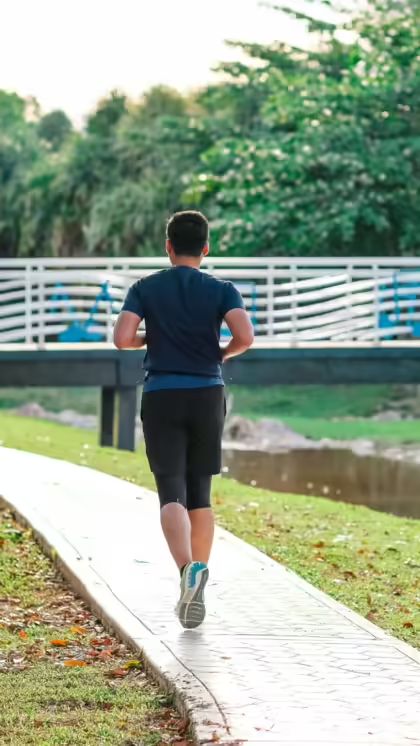
If you are looking to use walking as a form of exercise, you might want to think about a few things. First, what type of surface will you be walking on? If you are walking on uneven terrain, your abdominals will be working at a higher level to keep and maintain your balance. If you are walking on a treadmill which is flat and smooth, it won’t be the best way to work your muscles although there is still a benefit to your heart health from a cardio standpoint. If you decide to take a walk that is primarily uphill, it will certainly be more challenging on your thighs. This is due to how much power and stability we require to push ourselves at different inclines. When walking uphill, the hamstrings and glutes power the legs more so than walking on flat ground, whereas on the decline walk, the quads elicited more control over the legs.
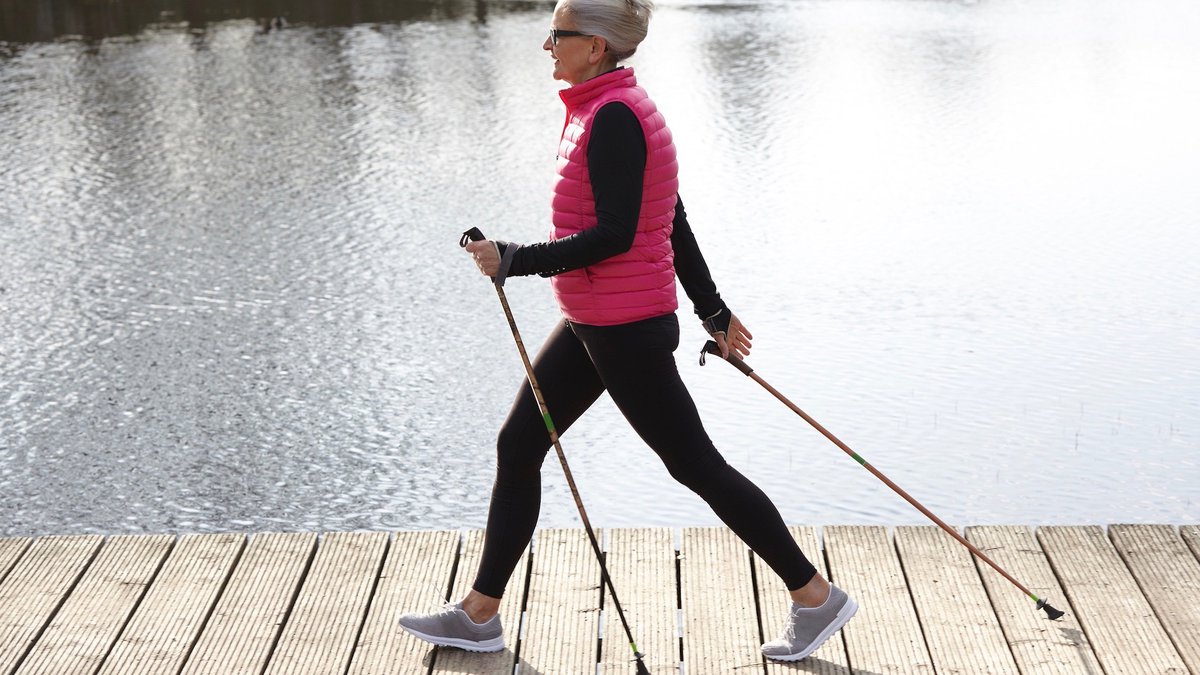
Alternating your route between mixed terrain, flat terrain and hill walking, as well as your speed is the optimum way to help you work all muscles during your walks. There are several types of walking. One type is Nordic walking. It is known for it’s ability to level up your usual hike. It involves the use of specially designed poles to assist in propeling you forward. Studies have shown that it increases upper body muscle activation by up to 15 times. It’s also been shown to reduce muscle activity in the erector spinae muscles that run along either side of your spine and hip retractor muscles. This helps to protect you from overuse and future back problems.
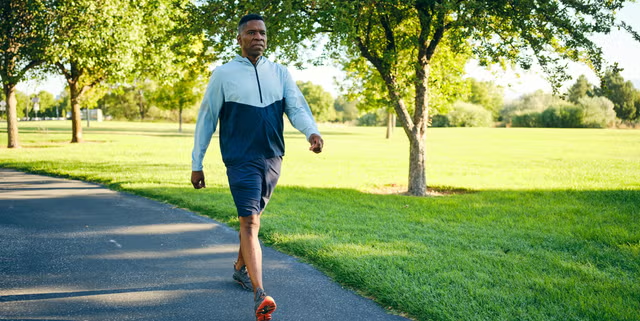
Ultimately, if building stronger leg muscles is your goal, compound lifts and weight-bearing exercises are also excellent things to focus on. It’s also important to know how activities such as walking impacts your body and how you can change it up to reap even more benefits for your muscles. Always be sure to start slowly on any exercise regime.